

We live in an age of instant information, yet some of the most persistent lies about history continue to thrive in our collective imagination. These aren't just harmless misconceptions—they're stories that have been repeated so often they've calcified into what we think of as fact. From classroom textbooks to blockbuster films, from social media memes to casual dinner conversations, these myths shape how we understand the past. And once a myth takes root, it's remarkably difficult to uproot, no matter how much evidence stands against it.
What makes these false narratives so durable? Part of it is sheer repetition—the more times we hear something, the more true it feels. But there's also the problem of narrative appeal. A good story, even a false one, is stickier than a complicated truth. We remember the dramatic, the simple, the emotionally resonant. Real history is messy, ambiguous, full of contradictions. Myths smooth over those rough edges, giving us clean stories with clear villains and heroes, causes and effects.
Still, correcting the record matters. When we get history wrong, we misunderstand not just the past but also how we arrived at the present. We make poor analogies, draw false lessons, and perpetuate stereotypes that have real consequences. So let's examine some of the most stubborn historical myths that refuse to die—and more importantly, let's understand why the truth is more interesting anyway.
The Little Emperor Who Wasn't
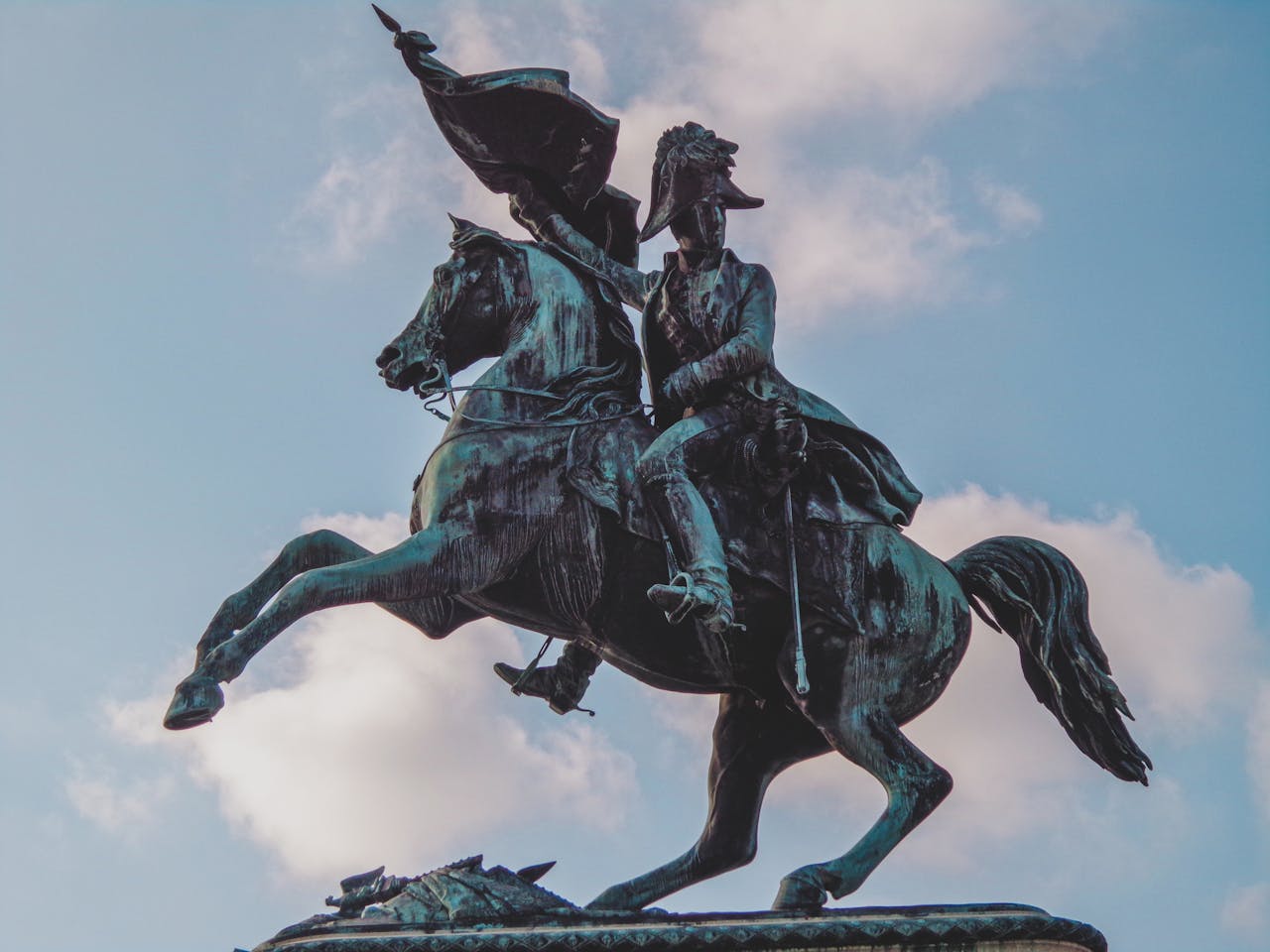
Napoleon Bonaparte has been dead for over two centuries, but the image of him as a comically short tyrant compensating for his height with military aggression persists in popular culture. The term "Napoleon complex" still gets thrown around to describe short men with outsized ambitions. There's just one problem: Napoleon wasn't particularly short.
At somewhere between 5'6" and 5'7", Napoleon stood at roughly the average height for a French man of his era. He was actually slightly taller than the average Englishman of the same period. So where did this myth come from? The answer lies in a combination of propaganda, measurement confusion, and the enduring power of a good insult.
British cartoonists and satirists had a field day portraying Napoleon as a diminutive figure during the Napoleonic Wars. These weren't meant to be accurate—they were deliberate caricatures designed to make the French leader look ridiculous and unthreatening. It was propaganda, and it worked brilliantly. The confusion was compounded by differences between French and British measurement systems. French inches (pouces) were longer than British inches, so Napoleon's height of 5'2" in French measurements translated to about 5'7" in British imperial units. By the time this information crossed the Channel, the context was often lost.
There's also the matter of Napoleon's Imperial Guard, an elite unit of soldiers chosen partly for their impressive height. Standing next to these towering men, Napoleon would naturally have appeared shorter by comparison. Contemporary accounts and portraits often depicted him alongside these guards, reinforcing the illusion. The myth has proven useful for psychologists and pop culture alike, giving us a convenient shorthand for discussing insecurity and overcompensation. But it does a disservice to understanding Napoleon as a historical figure—reducing him to a caricature rather than grappling with the complex military genius and political force he actually was.
Vikings and Their Imaginary Horns
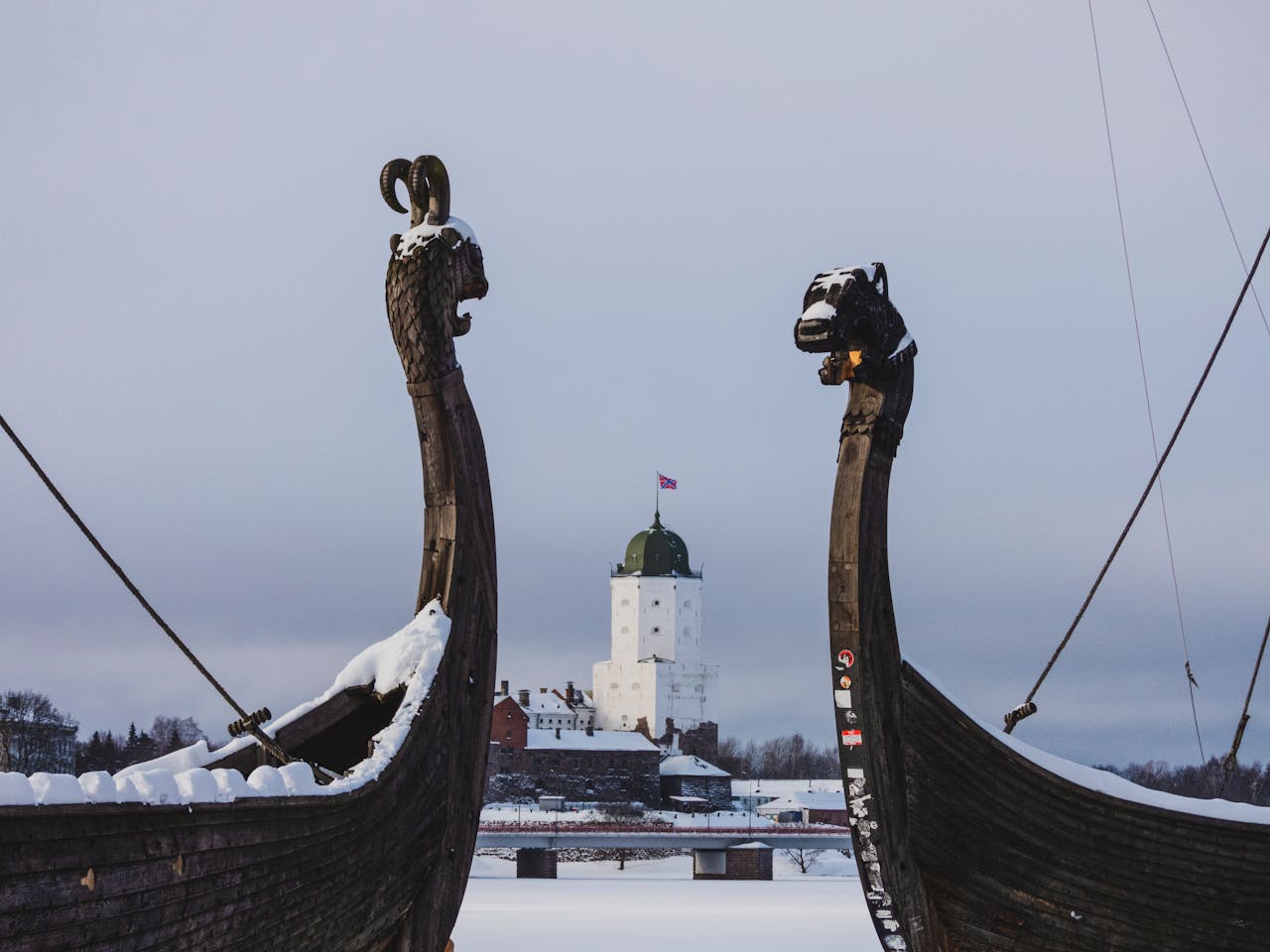
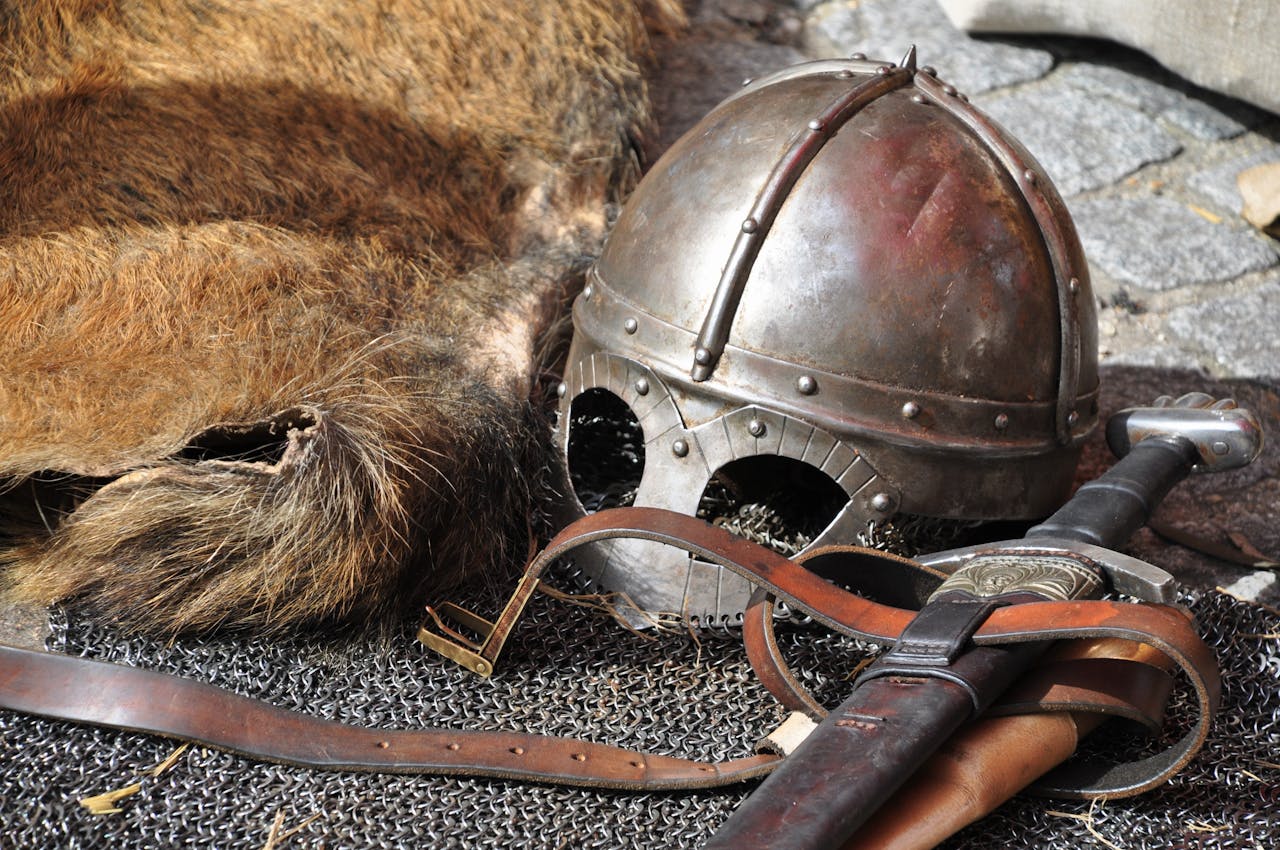
Close your eyes and picture a Viking. Chances are, you're seeing a fierce warrior in a helmet adorned with horns or wings. It's an image burned into popular consciousness through countless movies, Halloween costumes, and sports team logos. The Minnesota Vikings wear horned helmets. So do characters in video games and comic books. There's just one inconvenient fact: Vikings never wore horned helmets.
Not a single archaeological find from the Viking Age—spanning roughly 793 to 1066 CE—has turned up a horned helmet. What excavations have revealed are practical, functional helmets: typically simple iron caps, sometimes with a nose guard for added protection. These were designed to deflect blows and keep the wearer alive, not to make a fashion statement. Horns would have been worse than useless in combat—they'd provide an easy grip for an enemy to grab and twist, potentially snapping the wearer's neck.
The horned helmet myth appears to have its origins in 19th-century romanticism. When Richard Wagner's opera cycle "Der Ring des Nibelungen" premiered in the 1870s, costume designer Carl Emil Doepler created elaborate helmets adorned with horns and wings. These weren't attempts at historical accuracy—they were theatrical flourishes meant to evoke a sense of the mythic and primitive. The look caught on, and soon horned helmets were appearing in children's books, popular illustrations, and eventually film.
Pre-Viking Age peoples in Scandinavia and elsewhere did create ceremonial helmets with horns, but these date to the Bronze Age—more than a thousand years before the Viking Age. They were likely used in religious rituals, not warfare, and there's no evidence they influenced actual Viking combat gear. The irony is that real Viking culture was plenty fascinating without the horned helmets. Viking craftsmanship, navigation, social structures, and military tactics were all remarkable in their own right. By clinging to the horned helmet image, we're actually diminishing the Vikings, turning complex historical actors into one-dimensional cartoon barbarians.
The Great Wall and the View from Space
For generations, schoolchildren have been told that the Great Wall of China is the only human-made structure visible from space. It's a claim that speaks to our sense of wonder about both ancient engineering and space exploration. It's also completely false, though the myth has proven remarkably persistent despite repeated debunking by astronauts themselves.
The Great Wall is indeed impressively long—depending on how you measure it, somewhere between 5,500 and 13,000 miles when you account for all its branches and sections. But length doesn't equal visibility. From low Earth orbit (roughly 100 to 250 miles up), the wall is far too narrow to be distinguished from the surrounding landscape without optical aid. It's typically only about 20-30 feet wide, and its color and materials blend with the natural terrain around it.
Astronauts who have actually been to space have consistently confirmed this. Chinese astronaut Yang Liwei, China's first person in space, specifically said he couldn't see the Great Wall. American astronaut Eugene Cernan, who walked on the Moon, remarked that the Great Wall is less visible than the interstate highways in the United States. In fact, from the distances where you can see continents, no individual man-made structures are clearly visible to the naked eye—though you can see city lights at night, and certain large-scale human alterations to the landscape like reservoir systems or agricultural patterns.
The myth likely gained traction in the early 20th century, before anyone had actually been to space. In 1938, Richard Halliburton's book "Second Book of Marvels" claimed the wall was the only human work visible from the Moon—a particularly absurd claim since the Moon is roughly 240,000 miles away. The idea persisted through the space age, appearing in textbooks and travel guides despite being demonstrably untrue. Why does it endure? Perhaps because it fits our desire to believe that ancient accomplishments can transcend ordinary human scale, that there's something cosmic about human engineering at its finest.

Marie Antoinette's Apocryphal Cake
Few phrases encapsulate aristocratic indifference to suffering quite like "Let them eat cake." The quote is invariably attributed to Marie Antoinette, Queen of France, supposedly uttered when she was told that peasants had no bread to eat. It's become shorthand for the blindness and callousness of the privileged. It's also something she almost certainly never said.
The phrase "Qu'ils mangent de la brioche" ("Let them eat brioche") appears in Jean-Jacques Rousseau's autobiographical work "Confessions," written around 1765. Rousseau attributes it to "a great princess," but doesn't name her. The problem? Marie Antoinette was nine years old at the time and living in Austria, years before she would marry into the French royal family. Rousseau's anecdote was almost certainly apocryphal even when he wrote it, a generic story about royal disconnection from reality rather than a report of something that actually happened.
So how did it get pinned on Marie Antoinette? During the French Revolution, the queen became a prime target for revolutionary propaganda. She was Austrian by birth—already making her suspect in the eyes of French nationalists—and her spending on fashion and entertainment made her an easy villain in a time of economic crisis. Revolutionary pamphlets portrayed her as everything from a spendthrift to a sexual deviant, inventing or exaggerating scandals with remarkable creativity. Attributing the "cake" quote to her was just one more way to cement her image as a symbol of aristocratic decadence.
The historical Marie Antoinette was certainly not blameless—she did live lavishly while France struggled with poverty and debt—but she was also more complex than her popular image suggests. She engaged in charity work, and there's evidence she was troubled by the poverty she witnessed. By the time of the Revolution, she had actually become more politically astute and involved in attempts to preserve the monarchy. But nuance doesn't make for good propaganda. The "Let them eat cake" myth endures because it's too perfect a symbol to let go, a single sentence that seems to explain an entire revolution.

Columbus and the Discovery Problem
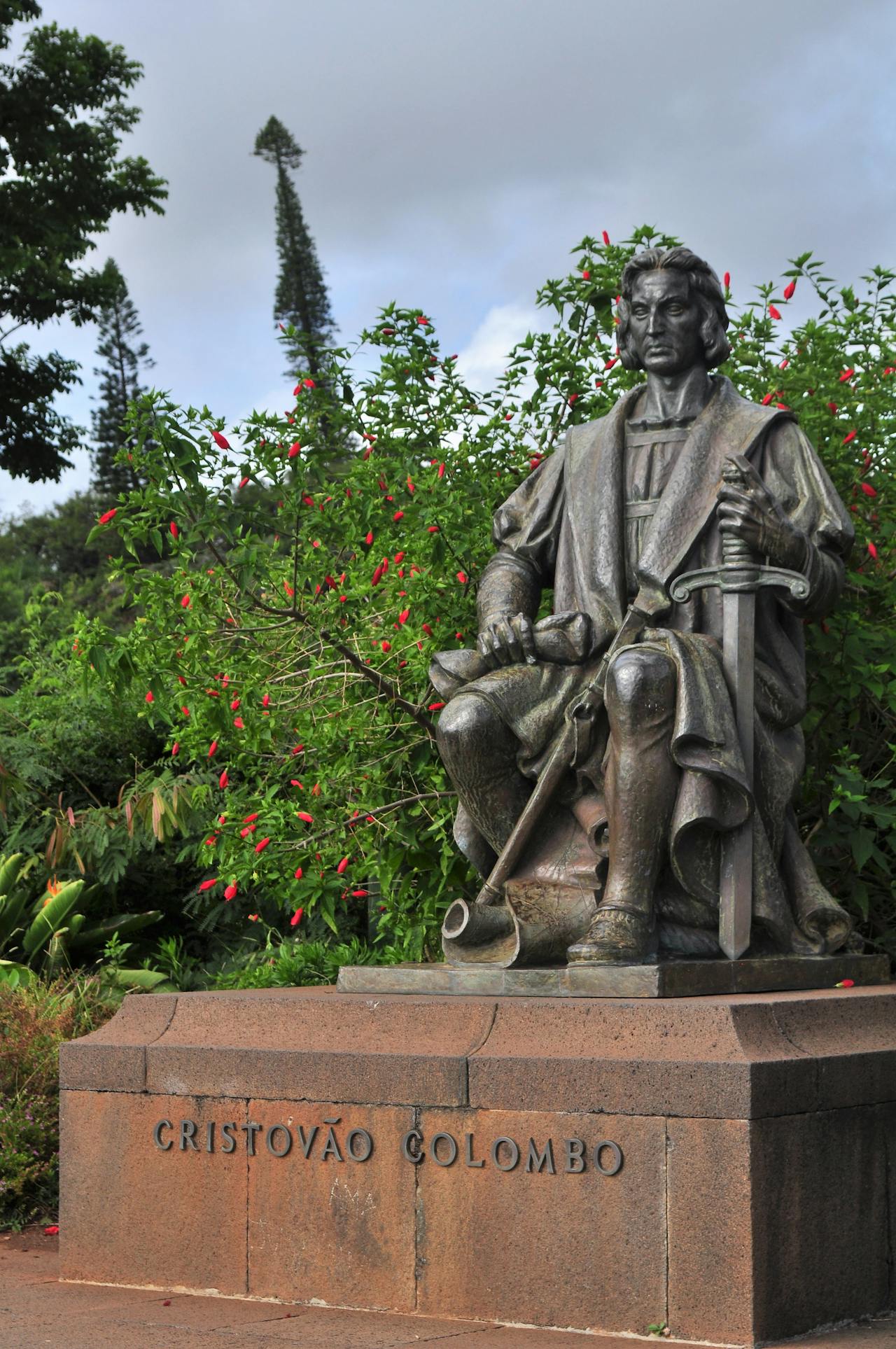
In 1492, Columbus sailed the ocean blue—and "discovered" America. Or so goes the rhyme that generations of American schoolchildren learned. The problems with this narrative are so numerous it's hard to know where to begin, but perhaps the most fundamental issue is with the word "discovered" itself. You can't discover something that millions of people already know exists.
When Columbus made landfall in the Bahamas, the Americas had been inhabited for at least 15,000 years, possibly much longer. The Indigenous peoples of the Americas had built complex civilizations, developed sophisticated agricultural systems, created monumental architecture, and established trade networks that spanned thousands of miles. The Aztec capital of Tenochtitlan was larger than any European city of its time. The Inca road system rivaled Rome's at its height. To call Columbus's arrival a "discovery" is to erase all of this—to treat the Americas as if they were empty, waiting for Europeans to give them meaning and history.
Moreover, Columbus wasn't even the first European to reach the Americas. Norse explorers, led by Leif Erikson, established a settlement at L'Anse aux Meadows in Newfoundland around the year 1000—nearly 500 years before Columbus's voyage. That settlement was short-lived and didn't lead to sustained contact between Europe and the Americas, but it definitively proves that Columbus wasn't the first.
What Columbus's voyages did accomplish was the establishment of ongoing contact between Europe and the Americas, with profound consequences for both. The Colombian Exchange—the transfer of plants, animals, culture, human populations, technology, and diseases between the Americas and the Old World—reshaped both continents. But this exchange came at a catastrophic cost to Indigenous peoples, who were decimated by disease, warfare, and enslavement. Framing Columbus as a heroic discoverer obscures this violence and its lasting legacy.
The Columbus myth has proven stubbornly resistant to revision, in part because it's deeply embedded in American origin stories. Italian-American communities, in particular, have embraced Columbus as a symbol of their heritage and contributions to American society. But history isn't about feel-good stories—it's about grappling with complexity and acknowledging difficult truths. We can recognize Columbus's navigational achievements and his role in history without pretending he discovered something that was never lost.
The Medieval Flat Earth That Never Was
Here's a story you've probably heard: During the Middle Ages, most people believed the Earth was flat. Sailors feared falling off the edge of the world. The Church suppressed scientific knowledge and persecuted those who dared suggest the Earth was round. Then came the Renaissance and the Enlightenment, sweeping away medieval ignorance with the light of reason. It's a compelling narrative of progress—and it's almost entirely fiction.
Educated people in medieval Europe knew the Earth was round. This wasn't controversial or heretical—it was simply accepted knowledge, inherited from ancient Greek scholars. Pythagoras theorized a spherical Earth in the 6th century BCE. Aristotle provided observational evidence in the 4th century BCE, noting that the Earth cast a round shadow on the Moon during lunar eclipses and that different constellations were visible at different latitudes. Eratosthenes calculated the Earth's circumference with remarkable accuracy around 240 BCE. All of this knowledge was available to medieval scholars through translations of classical texts.
Medieval universities taught the spherical Earth as basic cosmology. Theological works took it for granted. Even the most educated clergy accepted it—there was no conflict between Church doctrine and belief in a round Earth. When Columbus proposed his voyage west to reach Asia, the experts who doubted him didn't think he'd fall off the edge of the world. They correctly believed he had drastically underestimated the Earth's circumference and would run out of supplies long before reaching Asia. Columbus got lucky that there was an unexpected continent in the way.
So where did the flat-Earth myth come from? Largely from 19th-century writers who wanted to portray the Middle Ages as a period of ignorance to make the Renaissance and Enlightenment look more impressive by comparison. Washington Irving's 1828 biography of Columbus popularized the idea that Columbus faced opposition from flat-Earthers, though Irving simply invented this drama. Later, scholars like John William Draper and Andrew Dickson White promoted the "conflict thesis"—the idea that religion and science were inherently at war—and used the flat-Earth myth as supposed evidence.
The irony is that this myth itself reflects a kind of historical ignorance. By believing that medieval people believed in a flat Earth, we're making the same mistake we're accusing them of—accepting a false narrative because it fits our preconceptions. The real medieval period was far more sophisticated than we give it credit for, with genuine intellectual achievements in philosophy, mathematics, and natural science. But acknowledging that would complicate our neat story of progress from darkness to light.
Einstein's Mathematical Incompetence (That Never Existed)
There's a comforting story that gets told about Albert Einstein: that he was a poor student who failed mathematics, yet went on to revolutionize physics through sheer genius and determination. It's meant to be inspiring—proof that academic struggles don't define your potential. Parents invoke it to reassure children struggling with math. Motivational speakers cite it as evidence that conventional measures of intelligence don't capture what really matters. The only problem is that it's completely untrue.
Einstein was actually exceptional at mathematics from childhood. He taught himself calculus at age twelve. By fifteen, he had mastered differential and integral calculus. His teachers recognized his mathematical talent, even as they sometimes found his questioning and independent thinking disruptive. He didn't fail math—he excelled at it to a degree that made his later theoretical breakthroughs possible. You can't develop special relativity or general relativity without profound mathematical sophistication.
Where did the failure myth come from? There are a few sources. Einstein did fail his first entrance examination to the Swiss Federal Polytechnic School—but this was at age sixteen, two years younger than most applicants. He actually scored well in mathematics and physics but struggled with subjects like French and biology. He was admitted the following year after completing his secondary schooling. Later, when Einstein saw a report card reproduced in a magazine under the headline "Einstein Failed in Mathematics," he corrected the record himself, noting that he'd actually excelled in math and that the magazine had misunderstood the Swiss grading system.
There's also the fact that Einstein's rebellious, anti-authoritarian personality made for good storytelling. He clashed with rigid teachers, questioned conventional thinking, and famously worked as a patent clerk while developing his revolutionary theories. This real narrative of an outsider challenging the establishment gets conflated with the false narrative of academic failure. We like the idea that genius can emerge from unexpected places, that formal credentials don't determine worth. Einstein's actual story supports this—just not in the way the myth suggests.
The persistence of this myth actually does a disservice to understanding both Einstein and the nature of scientific achievement. Einstein's contributions weren't about overcoming a lack of ability—they were about combining extraordinary mathematical skill with profound physical insight and the courage to question fundamental assumptions about space, time, and gravity. His genius was in synthesis and imagination, but it was built on a foundation of rigorous technical knowledge. Pretending otherwise doesn't make him more relatable—it makes him less comprehensible.
Additional Myths Worth Mentioning
The myths we've explored in depth are far from the only historical misconceptions that refuse to die. Roman emperors didn't regularly give thumbs-up or thumbs-down signals to spare or condemn gladiators—that gesture appears nowhere in ancient sources and was likely invented centuries later. Medieval peasants didn't subsist on bread and water while nobles feasted—archaeological evidence and historical records show surprisingly varied diets across social classes, with common people regularly consuming vegetables, legumes, and fish. The infamous medieval chastity belt was largely a Victorian invention and myth, not a device actually used in the Middle Ages.
Isaac Newton didn't have his revelation about gravity from an apple bonking him on the head—though he did use falling apples as a thought experiment. Medieval Europeans didn't throw their waste into the streets as a general practice—cities had regulations about sanitation, though enforcement varied. The Salem witch trials didn't burn witches—the twenty people executed in Salem were hanged (except for one man pressed to death), while witch-burning was more common in Europe. The pyramids of Egypt weren't built by slaves in the way we imagine—current evidence suggests paid laborers and skilled workers, not enslaved masses.
Each of these myths persists for similar reasons: they're simple, dramatic, and confirm narratives we want to believe about historical periods. They divide history into clear categories—enlightened versus ignorant, civilized versus barbaric, progressive versus backward. But history resists these neat divisions. Every era contains multitudes, contradictions, both wisdom and folly.
Why We Can't Let Go
Understanding why historical myths persist helps us recognize why they're so difficult to dislodge. First, there's the psychological phenomenon known as the "illusion of truth effect"—repeated exposure to a claim makes it feel more true, regardless of its actual veracity. If you've heard since childhood that Napoleon was short or that Einstein failed math, that "knowledge" becomes part of your mental furniture. Correcting it requires not just learning new information but actively unlearning the old—a process most people find uncomfortable and sometimes resist.
Myths also persist because they serve social functions. The Columbus myth, for instance, has been used to justify American exceptionalism and to provide Italian-Americans with a heroic founding figure. The flat-Earth myth reinforces a narrative of Enlightenment progress and scientific rationality triumphing over religious superstition. The Napoleon myth lets us mockingly diagnose ambitious people. These myths aren't just errors—they're tools we use to make sense of the present and our place in it.
There's also the problem of what psychologists call "cognitive fluency." Simple, emotionally resonant stories are easier to remember and retell than complex, nuanced ones. "Einstein failed math but became a genius anyway" is a better story than "Einstein was mathematically precocious and built his theories on a foundation of advanced technical knowledge." The first version is inspiring and accessible; the second is accurate but less narratively satisfying. In the competition between a good story and a complicated truth, the good story usually wins.
Educational systems play a role too. Textbooks, once published, remain in circulation for years or decades. Teachers pass on what they were taught, which may include outdated or incorrect information. By the time a myth is definitively debunked in academic circles, it may take a generation or more for that correction to filter through to popular consciousness. In the meantime, movies, television shows, and popular books continue to recycle the old myths, reinforcing them for new audiences.
The internet has made this both better and worse. On one hand, fact-checking is easier than ever—you can verify a claim in seconds. On the other hand, the same mechanisms that spread accurate information also spread myths, often more effectively. A punchy, shareable infographic about Napoleon's height will reach more people than a careful academic article explaining the historical evidence. Social media rewards engagement, not accuracy, so compelling falsehoods often outperform boring truths.
The Stakes of Getting History Wrong
It's tempting to dismiss historical myths as harmless—what does it really matter if people think Vikings wore horned helmets or that the Great Wall is visible from space? These seem like trivial errors with no real-world consequences. But the habits of mind that let these myths flourish are the same ones that allow more dangerous misconceptions to take root.
When we accept the Columbus "discovery" myth, we're not just getting a date wrong—we're perpetuating a worldview that erases Indigenous peoples and justifies colonialism. When we believe the flat-Earth myth, we reinforce false narratives about the conflict between religion and science, making it harder to understand how these domains actually relate both historically and today. When we reduce Napoleon to a short man with a complex, we miss the opportunity to grapple with how charismatic leaders can reshape Europe through both brilliance and catastrophic violence.
Historical myths also make us less capable of thinking critically about the present. If we can't evaluate historical claims properly, how can we evaluate contemporary ones? The skills required are the same: checking sources, distinguishing between primary and secondary evidence, recognizing bias, understanding context, and maintaining appropriate skepticism. Every time we accept a historical myth without questioning it, we're practicing intellectual habits that make us more susceptible to misinformation in general.
Moreover, getting history right matters because the past shapes identity—personal, cultural, and national. The stories we tell about where we came from influence how we see ourselves and how we imagine our future. When those stories are built on myths, we're building on shaky foundations. Better to base our sense of who we are on accurate understanding, even when that understanding is more complex and less flattering than the myths we'd prefer to believe.
Toward a More Honest History
So what do we do with this knowledge? How do we move toward a more accurate understanding of history without falling into cynicism or concluding that nothing can be known with certainty?
First, we can cultivate intellectual humility. When we encounter a historical claim, especially one that seems almost too perfect or too convenient, we should ask: How do we know this? What's the evidence? Who first made this claim and why? Being skeptical doesn't mean dismissing everything—it means distinguishing between well-supported facts and appealing stories that lack evidence.
Second, we can seek out better sources. Popular history books, while entertaining, often perpetuate myths because accuracy is less important to commercial success than narrative appeal. Academic historians, while sometimes difficult to read, are generally more careful about distinguishing evidence from speculation. Museums, historical societies, and reputable educational websites offer more reliable information than social media or entertainment media.
Third, we can become comfortable with complexity. Real history is messy. People in the past were neither as ignorant as we sometimes imagine nor as enlightened as we might hope. Every era had both wisdom and foolishness, progress and regression, heroes and villains—and many people who were neither heroic nor villainous but simply human, acting under constraints we struggle to fully comprehend centuries later. Accepting this complexity is harder than embracing simple narratives, but it's more honest and ultimately more useful.
Finally, we should remember that debunking myths isn't about spoiling fun or being pedantic—it's about showing respect for the past and the people who lived it. When we perpetuate the Columbus myth, we disrespect Indigenous peoples. When we believe medieval people were all ignorant flat-Earthers, we disrespect the genuine intellectual achievements of that era. Getting history right is, in part, an act of recognition and respect toward those who came before us.
Conclusion
The myths we've examined—about Napoleon's height, Viking helmets, the Great Wall's visibility, Marie Antoinette's callousness, Columbus's "discovery," medieval flat-Earthers, and Einstein's mathematical struggles—are just a sample of the countless misconceptions that circulate about history. Each one persists for slightly different reasons, but they share common characteristics: they're simple, memorable, and serve narrative purposes that make them useful regardless of their truth value.
Confronting these myths isn't just an academic exercise in getting facts straight, though accuracy matters. It's also about developing the critical thinking skills we need to navigate an information environment that's increasingly hostile to truth. It's about recognizing how our own biases and preferences shape what we're willing to believe. And it's about maintaining a genuine curiosity about the past—not the comforting, simplified past of myths, but the complicated, contradictory, endlessly fascinating past that actually existed.
History isn't a collection of settled facts to memorize—it's an ongoing conversation about how to understand and interpret the past. That conversation requires us to question received wisdom, examine evidence carefully, and revise our understanding when the evidence demands it. The myths we've looked at here have all been thoroughly debunked by historians, yet they persist in popular culture because not enough people have gotten the memo. Maybe it's time we started paying better attention.
The next time you hear that Napoleon was short, or that Einstein failed math, or that medieval people thought the Earth was flat, you'll know better. More importantly, you'll have practiced the habit of asking: How do we know this? What's the evidence? And what might we be missing when we accept the simple story without question? These are good habits to cultivate, not just for understanding history but for making sense of the world we live in now.


