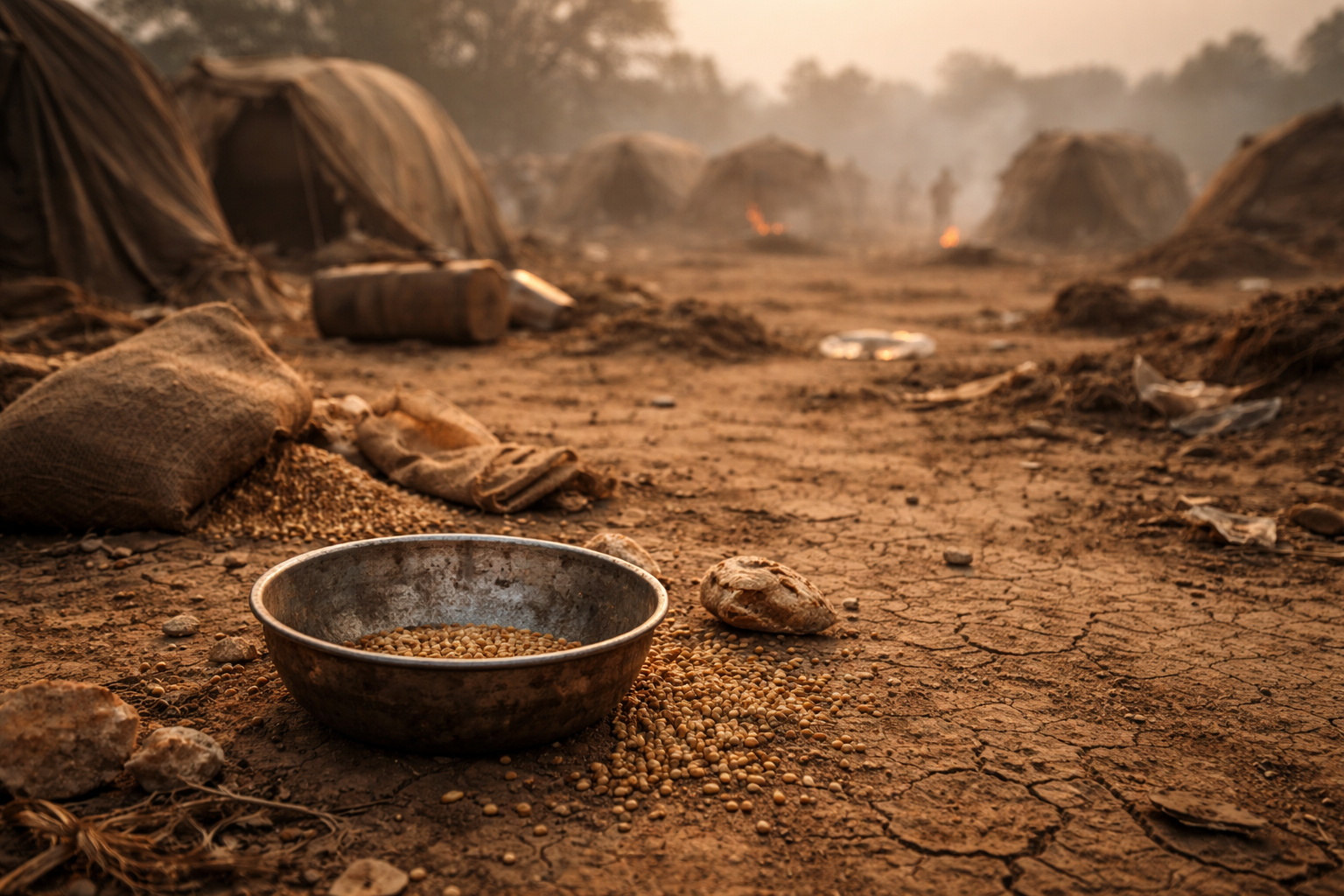
Despite technological progress and the enormous amount of food produced globally every year, hunger remains one of the most serious problems facing humanity today. In many parts of the world, millions of people still struggle to access enough food to survive, let alone maintain a healthy and balanced diet.
Modern agriculture is capable of producing large quantities of food, and international trade allows products to move across continents in a matter of days. Yet the reality is that a significant part of the global population still faces food insecurity on a daily basis.
According to international estimates, over 700 million people worldwide suffer from hunger or severe undernourishment. Many more live in conditions where access to proper nutrition is limited or unstable. This issue affects not only developing countries but also regions affected by economic crises, armed conflicts, and environmental challenges.
The scale of global hunger
The world’s population has grown rapidly over the last decades and now exceeds eight billion people. While food production has also increased significantly, access to food remains highly unequal.
Some of the regions most affected by hunger include:
-
Sub-Saharan Africa
-
South Asia
-
parts of the Middle East and North Africa
-
certain regions of Latin America
In many of these areas, hunger is closely linked with poverty, political instability, and limited access to resources.
Children are among the most vulnerable groups. Poor nutrition during early childhood can have long-term effects on physical development, learning ability, and overall health. In many cases, malnutrition also increases the risk of serious illness and early death.
Why hunger still exists
Hunger is often misunderstood as simply a lack of food. In reality, the problem is far more complex and is usually caused by a combination of several factors.
Armed conflicts
Wars and political instability are among the main drivers of food crises. Conflicts destroy agricultural infrastructure, disrupt supply chains, and force millions of people to leave their homes.
When farmers lose access to land, equipment, or water, agricultural production can collapse. At the same time, transporting food to affected regions becomes extremely difficult.
Poverty and inequality
In many countries, food is available in markets but remains unaffordable for a large part of the population. Low incomes, unemployment, and economic instability make it difficult for families to secure regular meals.
Economic inequality also plays a role, as resources and opportunities are often concentrated in specific regions or among smaller segments of society.
Climate change
Climate conditions have a direct impact on agriculture. Increasingly frequent droughts, floods, and extreme weather events are affecting crop yields in many parts of the world.
For communities that depend heavily on agriculture, a single failed harvest can have devastating consequences.
Problems with food distribution
Another important factor is the global food distribution system. While food production is high, it does not always reach the places where it is needed most.
Poor infrastructure, lack of storage facilities, and logistical challenges can lead to significant losses before food even reaches consumers.
Food waste
Ironically, a large amount of food is wasted every year. It is estimated that around one third of all food produced globally is lost or thrown away.
Food waste occurs at different stages, from agricultural production to transportation, retail, and household consumption.
The consequences of hunger
The effects of hunger go far beyond the absence of food. Chronic undernourishment has long-term consequences for health, education, and economic development.
Malnutrition weakens the immune system and makes people more vulnerable to disease. Children who grow up without proper nutrition may face lifelong health problems and reduced educational opportunities.
Hunger can also contribute to migration, social instability, and humanitarian crises in different parts of the world.
Is it possible to eliminate hunger?
Many experts believe that hunger is not primarily caused by a lack of global food production. Instead, it is the result of inequality, political instability, inefficient distribution systems, and economic barriers.
Reducing hunger requires coordinated efforts in several areas, including:
-
improving agricultural productivity in developing regions
-
supporting local farmers and rural communities
-
reducing food waste
-
improving transportation and storage infrastructure
-
strengthening international cooperation
Long-term solutions focus not only on providing food aid but also on building sustainable food systems that allow communities to become more self-sufficient