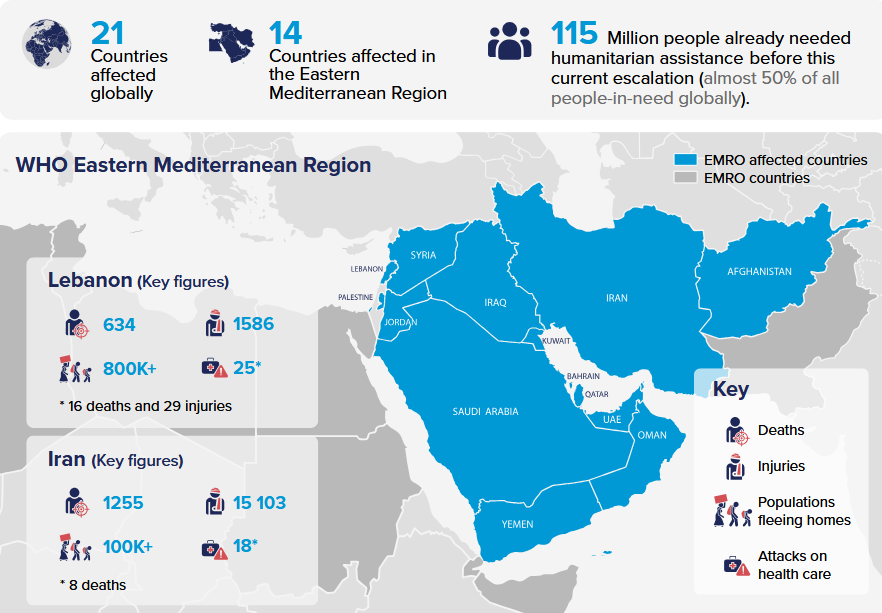
The Middle East is facing one of the most serious humanitarian crises in recent years. Even before the latest escalation of violence, the region was already struggling with long-standing instability, economic pressure, and fragile healthcare systems. The current wave of conflict has pushed many of those systems close to their limits.
According to the World Health Organization (WHO), more than 115 million people across the region were already in need of humanitarian assistance before the recent escalation began. That figure represents almost half of all people worldwide currently requiring humanitarian support, highlighting the scale of the challenges already present before the latest developments.
Rising Casualties and Displacement
The human toll continues to grow. In Iran, authorities report 1,255 deaths and more than 15,100 injuries since the start of the escalation. Over 100,000 people have been forced to leave their homes due to security concerns.
In Lebanon, the situation is also worsening. At least 634 people have been killed and more than 1,586 injured, while over 800,000 people have been displaced. Many are currently staying in temporary shelters where overcrowding, limited sanitation, and restricted access to healthcare are becoming serious concerns.
Healthcare Systems Under Pressure
Healthcare infrastructure across the region is also being heavily affected by the conflict. The WHO has verified 18 attacks on healthcare facilities in Iran, which resulted in eight deaths, and 25 attacks in Lebanon, causing 16 deaths and 29 injuries.
These incidents are further weakening already strained medical systems. In Lebanon, 48 primary healthcare centres and five hospitals have closed following evacuation orders.
In other areas, access to healthcare is also becoming increasingly difficult. In Iraq, road closures are delaying ambulance movements and the delivery of medicines. In the West Bank, security checkpoints and movement restrictions are slowing emergency transport and specialist referrals.
Gaza: A Health System Near Collapse
The situation in Gaza remains particularly critical. With most border crossings still closed, the delivery of humanitarian aid and medical supplies has been severely limited.
Of the 36 hospitals that were operating before the escalation, half are now non-functional. The Ministry of Health reports that 46% of essential medicines and 66% of medical consumables are currently out of stock.
More than 18,500 patients require medical treatment that is not available within Gaza, but medical evacuations have been suspended since late February, leaving many without access to specialised care.
Growing Risk of Disease Outbreaks
Large-scale displacement is also increasing the risk of disease outbreaks. Overcrowded shelters, limited access to clean water, and damaged sanitation systems create conditions where infectious diseases can spread quickly.
Health experts warn that illnesses such as measles, respiratory infections, and acute watery diarrhea could spread rapidly if vaccination programs and disease surveillance systems remain disrupted.
At the same time, public health monitoring systems in several areas have been affected by the conflict, which may delay the detection of emerging outbreaks.
Environmental Risks
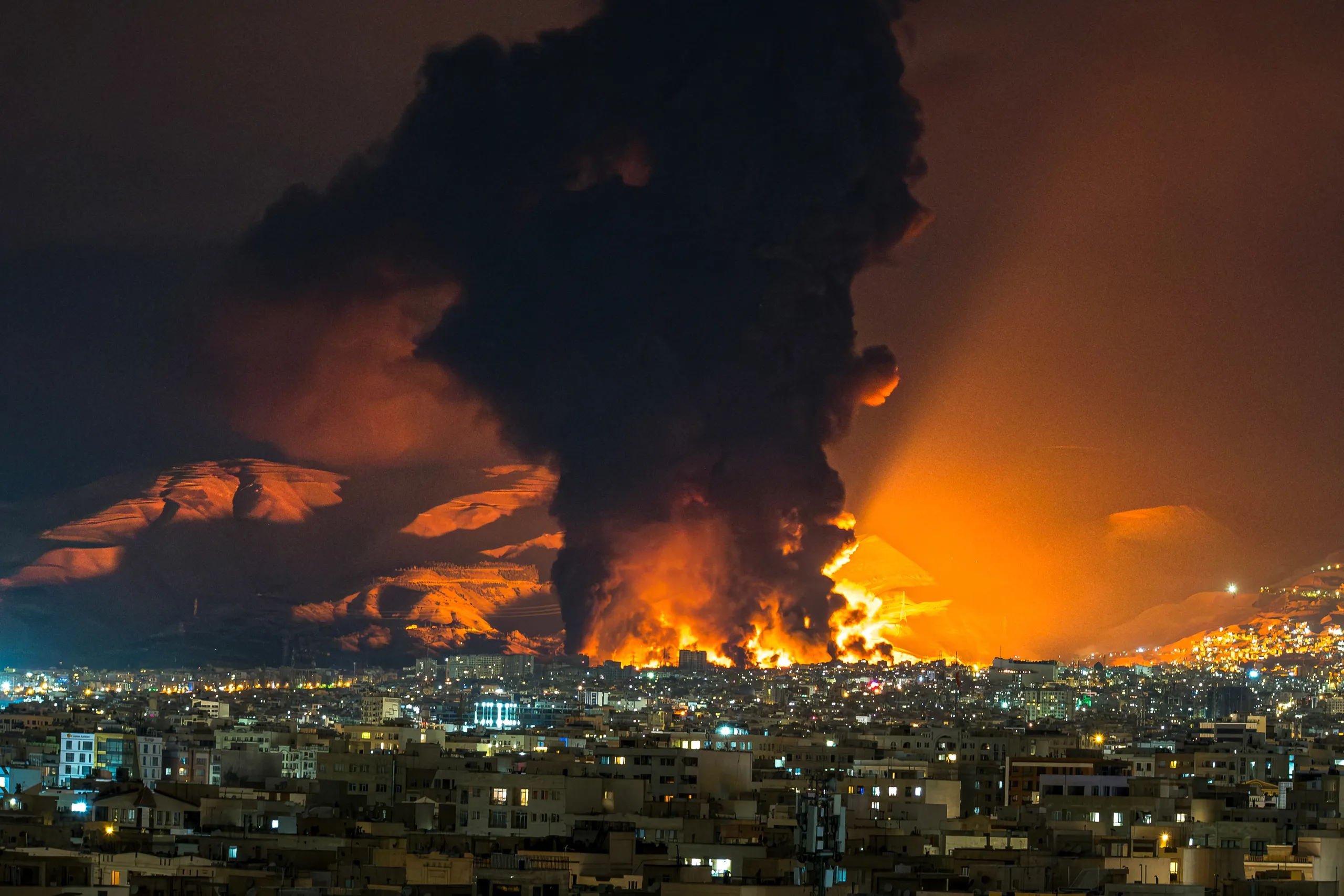
The conflict is also raising environmental concerns. Strikes on oil storage facilities and refineries in Iran, Bahrain, and Saudi Arabia have caused fires that release harmful pollutants into the air.
Burning petroleum produces toxic substances that can damage respiratory health and contaminate air and water supplies.
In addition, the International Atomic Energy Agency (IAEA) has confirmed damage to buildings at Iran’s Natanz nuclear facility. So far, no increase in radiation levels has been detected, but monitoring continues.
Funding Challenges
The WHO is coordinating a regional emergency health response focused on strengthening trauma care, maintaining essential health services, and improving disease monitoring.
However, the response faces a major financial challenge. For 2026, the WHO estimates it needs around $633 million to support health emergency operations in the region. At present, about 70% of that funding remains unmet.
Without additional resources, humanitarian organisations warn that the ability to respond effectively may become increasingly limited.
A Crisis with Wider Consequences
The current situation in the Middle East is not only a political or military issue. It is also a growing public health emergency affecting millions of people.
Displacement, damaged infrastructure, environmental risks, and the potential spread of disease all contribute to a complex crisis that could have long-term regional consequences.
The coming weeks will be critical in determining whether humanitarian efforts can keep pace with the rapidly evolving situation.