

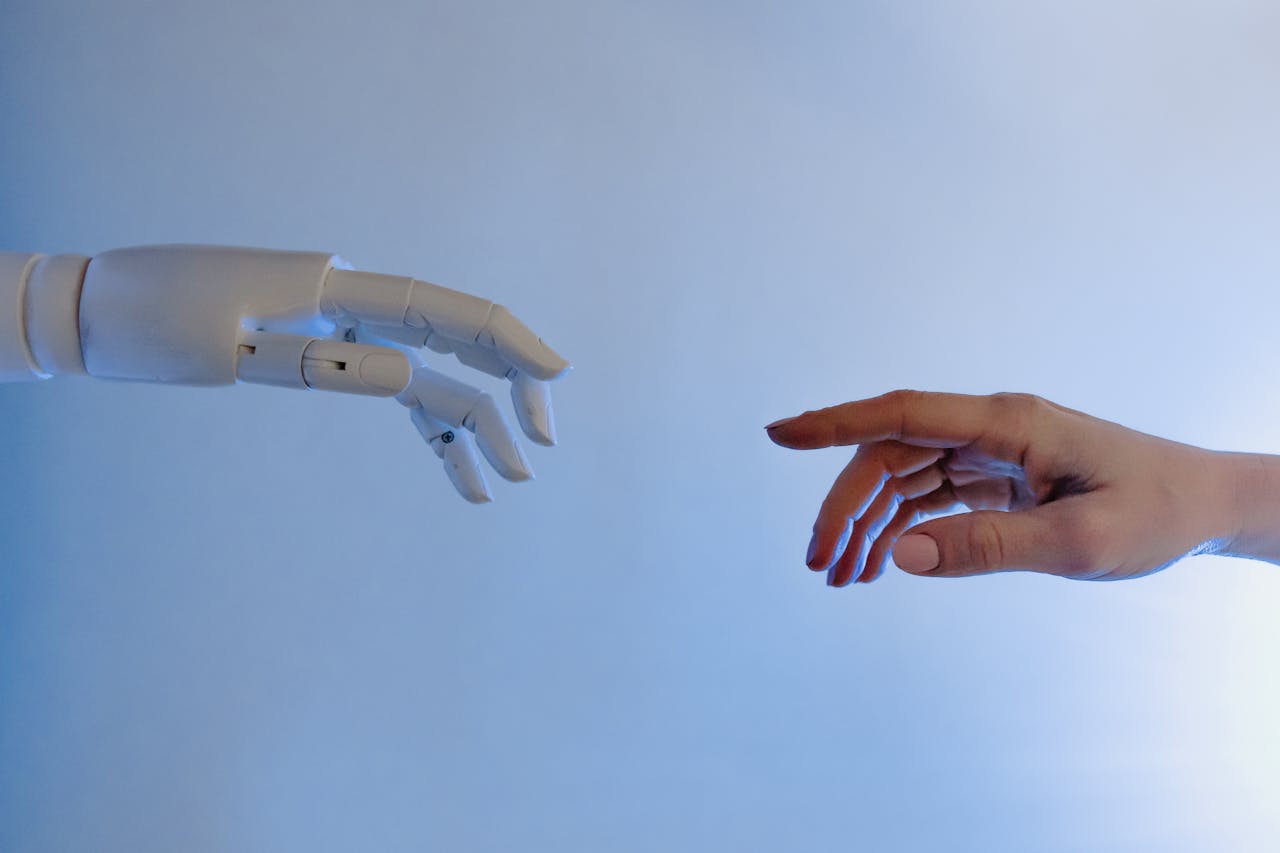
AI Enters Everyday Life: What We Gain and What We Lose
Artificial Intelligence is no longer a distant concept from science fiction. It has quietly moved into our homes, workplaces, and pockets. From voice assistants and recommendation algorithms to medical diagnostics and creative tools, AI is becoming an invisible companion in everyday life. While this transformation brings undeniable benefits, it also raises serious questions about what we may be losing along the way.
What We Gain
One of the biggest advantages of AI is efficiency. Tasks that once took hours — data analysis, scheduling, customer support — can now be done in seconds. AI systems don't get tired, don't need breaks, and can operate 24/7. This allows businesses to grow faster and individuals to focus on more complex or creative work.
AI also improves accessibility. Translation tools break language barriers, voice recognition helps people with disabilities, and personalized learning platforms adapt education to individual needs. In healthcare, AI can detect diseases earlier than humans and assist doctors in making more accurate decisions.
Another major gain is personalization. From music and movie recommendations to targeted news feeds, AI tailors content to individual preferences. When used responsibly, this can enhance user experience and make technology feel more human-centered.
Beyond efficiency, AI can augment human creativity in unexpected ways. Artists collaborate with generative tools to explore new styles, scientists use AI to discover patterns invisible to the human eye, and writers employ language models as thought partners. The question is not whether AI can be creative, but whether its creativity helps us become more human or less.
What We Lose
However, these benefits come at a cost. One of the most significant losses is privacy. AI systems rely on massive amounts of data — often personal, sensitive, and continuously collected. Many users are unaware of how much information they share or how it is used, stored, or sold.
There is also the risk of over-dependence. As AI takes over more cognitive tasks, humans may gradually lose certain skills: critical thinking, memory, decision-making. When algorithms decide what we see, read, or believe, our worldview can become narrow and manipulated without us noticing.
Research already shows measurable effects: people who rely heavily on GPS navigation develop weaker spatial memory, and those who outsource writing to autocomplete tools may lose nuance in expression. These aren't catastrophic losses, but they represent a subtle erosion of capacities we once took for granted.
Another concern is human connection. AI chatbots, virtual companions, and automated interactions can replace real social contact. While convenient, this may lead to increased isolation and a weakening of empathy — something no machine can truly replicate.
Yet perhaps the deepest loss is economic. AI-driven automation is displacing workers faster than new jobs are being created, particularly in routine cognitive and manual labor. Unlike past technological revolutions, this shift demands not just retraining but reimagining the social contract: how do we distribute wealth and meaning in a world where human labor is increasingly optional?
The Unequal Impact
AI's effects are not felt equally. Wealthier nations and individuals benefit disproportionately from productivity gains, while developing countries risk becoming data sources without gaining technological sovereignty. Within societies, those with digital literacy and resources can harness AI as a tool; those without become subjects of algorithmic decisions they neither understand nor control.
Language itself creates divides. Most advanced AI systems are trained primarily on English, marginalizing billions who speak other languages and embedding cultural assumptions that don't translate globally.
The Balance We Must Find
AI itself is neither good nor evil. It is a tool — powerful, flexible, and shaped by human intentions. The real challenge lies in how we choose to use it. Transparent regulations, ethical design, and digital education are essential to ensure that AI serves humanity rather than controls it.
But awareness alone isn't enough. We need concrete action: mandating explainability in high-stakes AI decisions, teaching critical AI literacy in schools from an early age, creating economic safety nets for displaced workers, and ensuring that the benefits of automation are shared broadly rather than concentrated among tech giants.
We also need to cultivate what AI cannot replicate: the irreducibly human. Deep presence with others. Physical skill. Tolerance for uncertainty. The ability to ask questions no dataset anticipated.
As AI continues to blend into everyday life, we must ask not only what technology can do for us, but also what kind of society we want to become. Progress should not come at the cost of our autonomy, creativity, and humanity.
The choice is not between accepting AI or rejecting it, but between shaping it intentionally or drifting into a future designed by default. That choice belongs to all of us — but only if we make it consciously, now, while we still can.


