

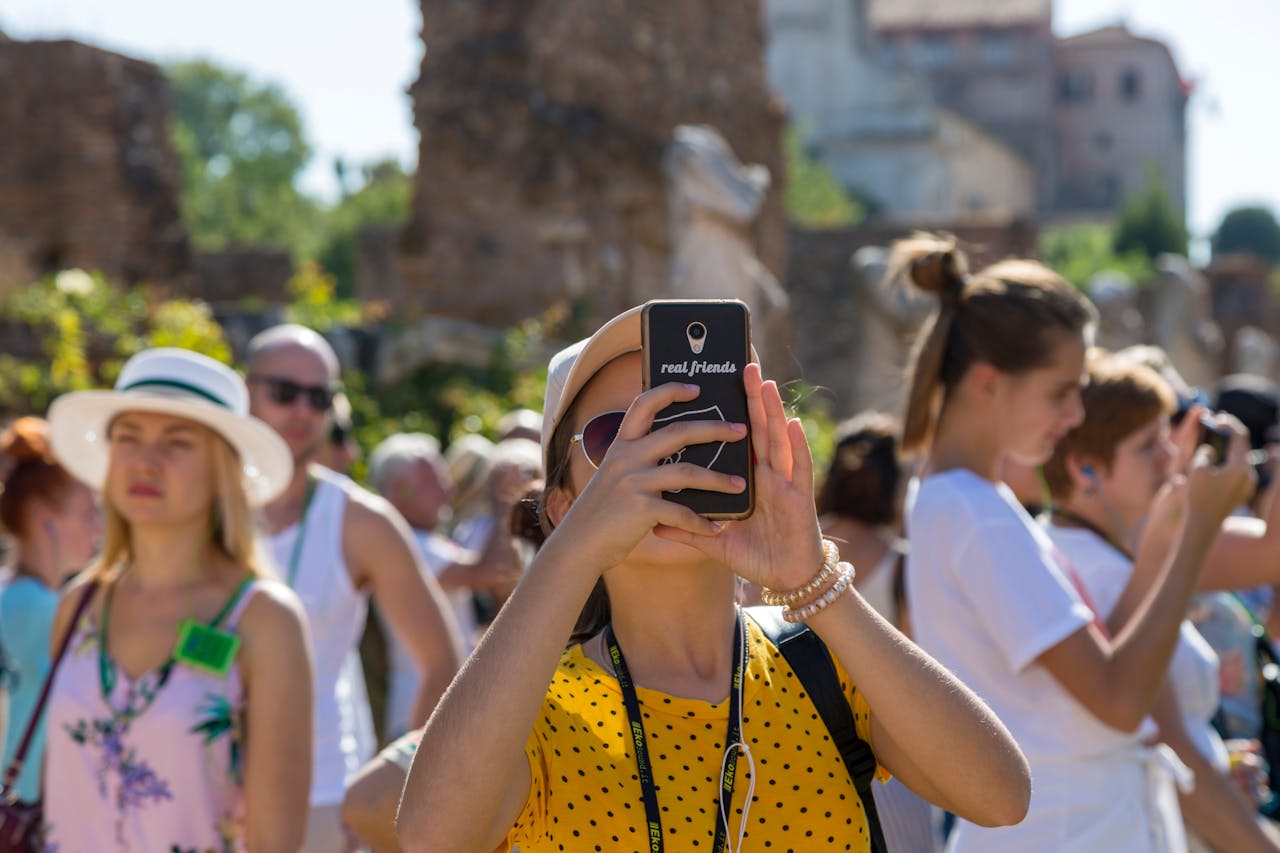
For decades, tourism has been celebrated as an unambiguous force for good — a bridge between cultures, an engine of economic growth, a creator of jobs, and a catalyst for broadening human perspectives. The ability to board a plane in London and wake up on a different continent within hours has become one of the defining privileges of modern life, democratizing access to experiences once reserved for the wealthy elite.
But behind the carefully curated Instagram posts, the glossy travel brochures, and the record-breaking visitor statistics lies an increasingly urgent question that the industry would prefer we didn't ask: has mass tourism become one of the most environmentally and socially destructive forces on the planet?
The uncomfortable truth — one that challenges our assumptions about freedom, progress, and the right to explore — is that in its current form, mass tourism is profoundly unsustainable. This isn't an indictment of travel itself, which remains one of humanity's most enriching activities. Rather, it's a reckoning with the scale, the velocity, and the extractive economic model that now drives the global tourism machine.
The Environmental Catastrophe No One Wants to Calculate
Modern tourism's environmental footprint extends far beyond what most travelers realize or acknowledge. At its core, the industry depends heavily on three particularly carbon-intensive pillars: aviation, cruise ships, and resource-hungry infrastructure development.
Aviation alone tells a damning story. Air travel currently accounts for approximately 2-3% of global carbon emissions — a figure that sounds modest until you consider that only a small fraction of the world's population flies regularly. If aviation were a country, it would rank among the top ten emitters globally. More alarmingly, these emissions occur at high altitude where their warming effect is amplified. The rise of ultra-budget airlines has fundamentally transformed flying from an occasional luxury into routine consumption, with some travelers taking multiple short-haul flights annually for weekend breaks that previous generations would never have considered.
Cruise ships represent perhaps the most concentrated form of tourism-related environmental damage. A single large cruise ship can emit as much pollution as a million cars in a day, dumping sewage, graywater, and toxic chemicals directly into marine ecosystems. They burn some of the dirtiest fuel available, contributing massively to air pollution in port cities while generating mountains of waste with limited oversight or accountability.
But the environmental devastation extends well beyond transportation:
Coral reefs — among Earth's most biodiverse and fragile ecosystems — suffer irreversible damage from uncontrolled tourist access. Snorkelers stand on delicate formations, boats drop anchors that destroy centuries of growth, and sunscreen chemicals poison the water. The Great Barrier Reef, the Caribbean, and Southeast Asian reefs all show the scars.
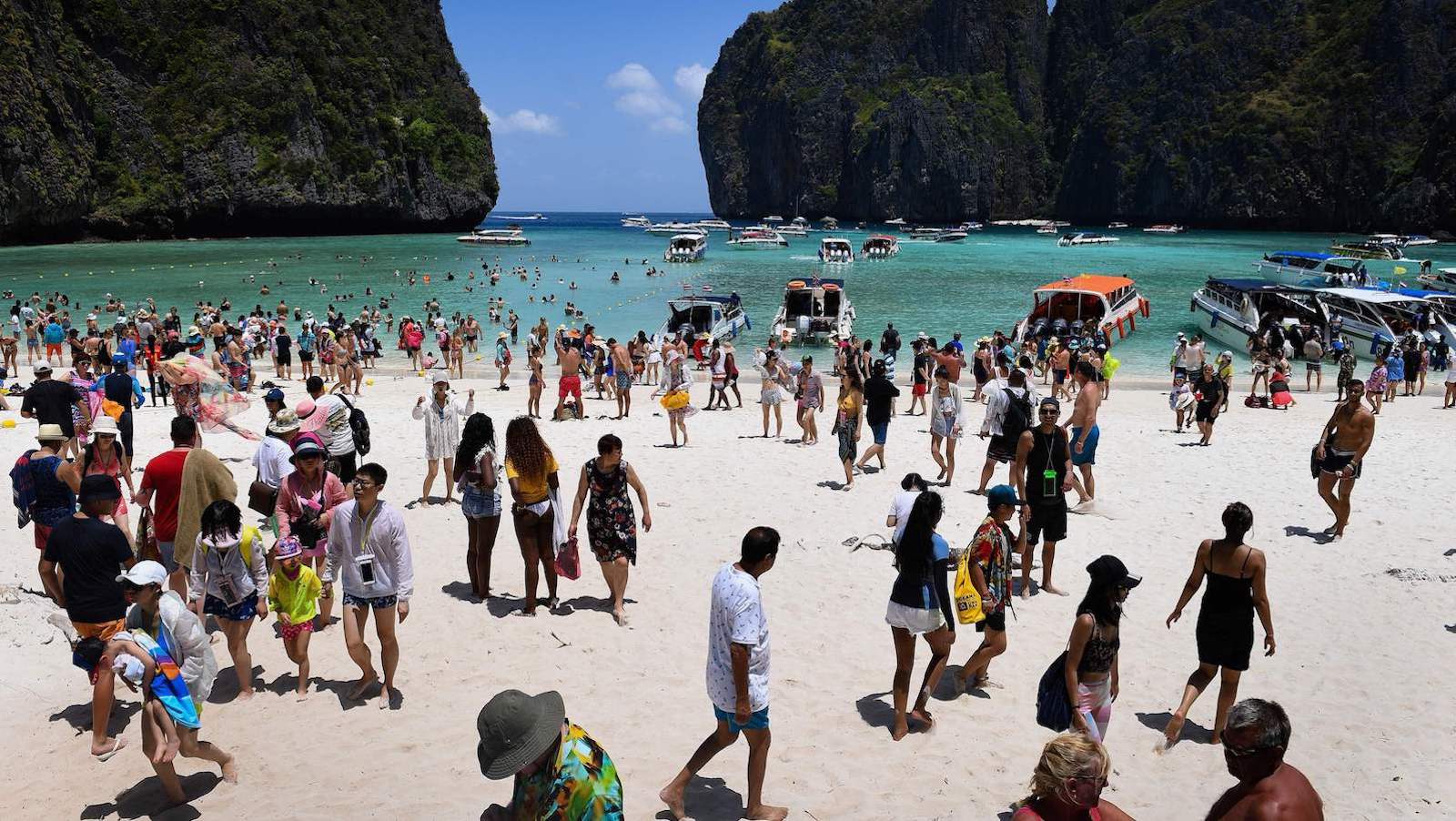
Beaches worldwide drown under waste left by visitors. Plastic bottles, food packaging, cigarette butts, and microplastics accumulate faster than local communities can manage. Popular beaches in Thailand, Bali, and the Mediterranean have faced temporary closures due to environmental degradation directly attributable to tourism.
National parks and wilderness areas designed to protect nature increasingly suffer from loving it to death. Trails erode under millions of footsteps. Wildlife behavior changes due to constant human presence. Vegetation disappears. Yosemite, Yellowstone, the Scottish Highlands, and New Zealand's conservation areas all struggle with this paradox: how to share natural wonders without destroying them.
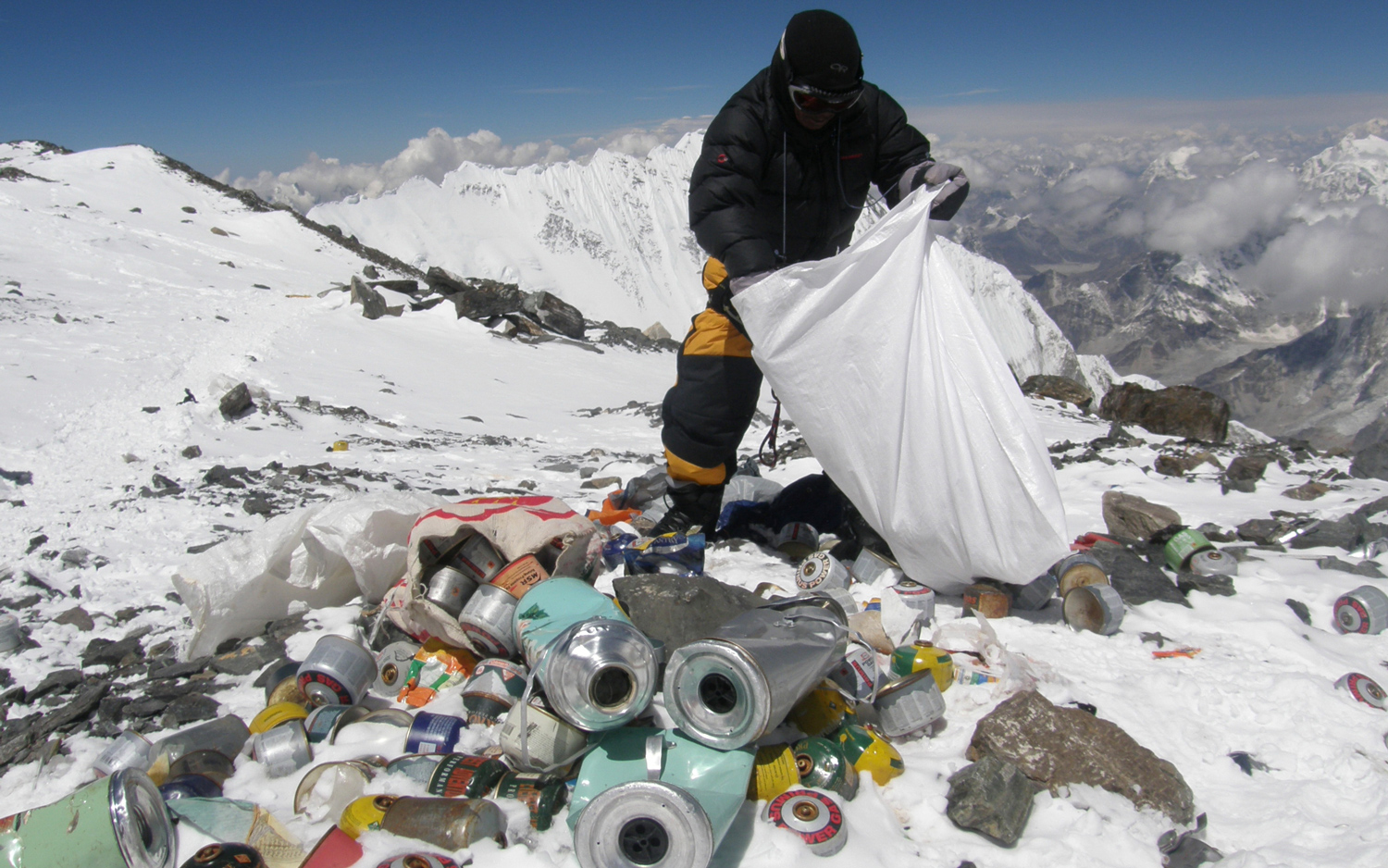
Mountain peaks — from Everest to Kilimanjaro — have become high-altitude garbage dumps. Climbers leave behind oxygen canisters, tents, food waste, and even human bodies. The pursuit of bucket-list achievements has transformed sacred peaks into monuments to human hubris.
Water scarcity intensifies in destinations where tourism concentrates. Hotels with lush gardens, swimming pools, golf courses, and unlimited showers consume water at rates far exceeding local needs — often in regions already facing water stress. Residents in places like Bali and certain Greek islands face rationing while nearby resorts maintain artificial oases.
Fragile ecosystems evolved over millennia, balanced within narrow parameters. They are fundamentally not built to withstand millions of annual visitors, each leaving their mark. When tourism exceeds ecological carrying capacity — and in most popular destinations, it already has — damage becomes not just likely but inevitable and often irreversible.
And yet, the global tourism industry's response is to continue promoting growth as not just a goal but the primary measure of success.
When Cities Become Theme Parks: The Death of Urban Life
In many of the world's most iconic destinations, tourism is no longer simply an economic sector — it has become the dominant force reshaping urban life itself, often with devastating consequences for local communities.
Short-term rental platforms like Airbnb have fundamentally transformed housing markets in popular cities. Property owners quickly realized they could earn more renting to tourists by the night than to residents by the month. The result? Mass conversion of residential housing into de facto hotels, without the regulations, taxes, or employment that traditional hotels provide.
The consequences cascade through communities:
Housing affordability collapses. In Barcelona's Gothic Quarter, Lisbon's Alfama district, Venice's historic center, and Amsterdam's canal ring, long-term residents have been systematically priced out. Entire apartment buildings now function exclusively as tourist accommodation. Families who lived in these neighborhoods for generations can no longer afford rent in their own communities.
Social fabric disintegrates. When locals leave, they take with them the daily rhythms that make a neighborhood authentic — the corner shop owner who knows everyone by name, the school playground filled with children's voices, the elderly residents chatting on benches. What remains resembles a living museum or theme park: aesthetically intact but socially hollow.
Infrastructure strains under impossible demand. Public transportation, waste management, water systems, and emergency services designed for a certain resident population suddenly serve multiples of that number. During peak season, some neighborhoods in Venice see more tourists than residents by a factor of a hundred to one.
Cities such as Barcelona, Venice, Lisbon, Prague, Dubrovnik, and Amsterdam have witnessed increasingly vocal and sometimes desperate protests from residents. They're frustrated not by tourism itself, but by its transformation from sustainable economic activity into existential threat. Rising rents, chronic overcrowding, relentless noise, public drunkenness, and the sense that their city now exists primarily for others' entertainment rather than their own lives.
Local businesses face a perverse displacement. The family-run bakery where neighborhood residents bought bread for fifty years closes, replaced by a shop selling mass-produced souvenirs. The neighborhood restaurant serving traditional cuisine becomes a burger chain or an overpriced tourist trap with mediocre food and multilingual menus. Bookshops become gelato stands. Pharmacies become luggage stores.
Mass tourism can hollow out a city from within, creating communities that are economically dependent on visitors yet socially disconnected from their own identity and history. The city survives, but the soul that made it worth visiting gradually disappears.
The Commodification of Culture: When Authenticity Becomes Performance
Tourism doesn't only reshape physical landscapes and economic structures — it fundamentally transforms culture itself, often in ways both subtle and profound.
Traditions become performances, scheduled for tourist convenience rather than cultural meaning. Sacred ceremonies that once marked important community moments now run multiple times daily for tour groups. The spiritual becomes spectacle, the meaningful becomes merchandise.
Cuisine undergoes relentless simplification to match foreign expectations and avoid challenging unfamiliar palates. Complex regional dishes with centuries of history get reduced to tourist-friendly versions that bear little resemblance to what locals actually eat. "Authentic" restaurants serve what visitors expect authenticity to taste like rather than what it actually is.
Historic districts transform into souvenir corridors where every storefront sells essentially identical mass-produced items with minimal connection to local culture. The same cheap magnets, keychains, and t-shirts appear in Prague, Barcelona, and Bangkok, manufactured in distant factories and imported specifically for tourist consumption.
Language and interaction become transactional. Conversations follow scripts designed to maximize tips and sales rather than genuine exchange. Cultural ambassadors become service workers performing an idea of their culture.
Architectural heritage faces pressure to freeze in tourist-friendly amber rather than evolve organically. Cities become reluctant to modernize visible infrastructure because visitors expect a particular aesthetic. Development focuses on preserving picturesque facades while the living city behind them struggles.
The irony cuts deep: people travel thousands of miles in search of authenticity, seeking genuine cultural experiences and connections with different ways of life. Yet their collective presence — their sheer numbers, their expectations, their economic power — often erodes the very authenticity they seek. What was organic becomes curated. What was spontaneous becomes scheduled. What was real becomes replica.
This doesn't mean cultural exchange through travel is inherently harmful — quite the opposite. Responsible, thoughtful travel can foster profound mutual understanding, challenge prejudices, and build bridges between communities. But when destinations become products optimized for mass consumption, when culture becomes packaging designed to move units, something essential is lost. We risk creating a world of cultural theme parks: beautifully preserved, perfectly presented, and utterly hollow.
Economic Dependency: Building Castles on Sand
Tourism undeniably serves as a powerful economic driver, particularly for developing regions with limited alternatives. It creates employment, generates foreign currency, and can fund infrastructure improvements that benefit residents. These benefits are real and shouldn't be dismissed.
However, overreliance on tourism creates profound vulnerability that many communities only recognize when crisis strikes.
The COVID-19 pandemic provided a devastating case study. When borders closed and flights stopped, tourism-dependent economies didn't just contract — many faced near-total economic collapse almost overnight. Islands in the Caribbean, Greece, and Thailand that had built entire economies around visitor arrivals saw unemployment skyrocket and poverty rates spike. Businesses shuttered permanently. Skilled workers emigrated. Years of development reversed in months.
The economic model itself carries inherent problems:
Seasonal volatility means many workers face months of unemployment annually, struggling to survive until tourists return.
Wages often remain low despite tourism's profitability, with most revenue flowing to international hotel chains, airlines, and booking platforms headquartered elsewhere. Local workers serve tourists but capture only a small fraction of spending.
Economic leakage means much of tourism revenue leaves the destination entirely. All-inclusive resorts import food, international chains repatriate profits, and tour operators based abroad capture the bulk of package tour revenues.
Alternative economic sectors atrophy. When tourism appears more immediately profitable, investment, talent, and infrastructure flow toward it. Traditional industries, agriculture, and manufacturing decline. Skills diversify. When tourism collapses, communities lack alternatives.
Political economy becomes distorted. Governments prioritize tourism infrastructure — airports, resorts, tourist zones — over services for residents. Tax breaks for hotel developers mean less funding for schools and hospitals.
An economy built primarily on visitors fundamentally lacks resilience. Diversification matters critically — yet in destination after destination, tourism crowds out other possibilities because short-term gains overshadow long-term stability.
Communities become trapped in golden handcuffs: economically dependent on an industry that may not serve their long-term interests but too invested to imagine alternatives.
Is Travel the Problem?
No. Travel itself is not the enemy.
Done thoughtfully, travel can be genuinely transformative. It encourages empathy by putting human faces to abstract others. It challenges assumptions by exposing us to different ways of organizing life. It builds global awareness and understanding. It creates moments of wonder that stay with us forever. It supports millions of livelihoods worldwide and provides economic opportunity in regions with few alternatives.
The problem lies in the philosophy — the "more is always better" growth imperative that defines mass tourism. More visitors, more flights, more cruise ships, more revenue, more destinations opened to development — regardless of environmental cost, social impact, or cultural consequence.
When success is measured purely by arrival numbers and spending totals, sustainability inevitably becomes secondary. When quarterly growth targets drive decision-making, long-term wellbeing gets sacrificed. When tourism becomes extractive rather than reciprocal, everyone ultimately loses.
The tourism industry has borrowed the worst impulses of consumer capitalism: planned obsolescence through bucket-list culture that encourages constant novelty-seeking, aggressive marketing that manufactures desire, pricing strategies designed to maximize volume, and externalization of environmental and social costs.
We've created a system where airlines profit from carbon emissions, cruise lines profit from ocean pollution, platforms profit from housing crises, and destinations compete to attract ever more visitors until they break — then get abandoned for the next unspoiled paradise.
What Comes Next? Reimagining Travel for a Livable Planet
If mass tourism continues on its current trajectory, more destinations will inevitably reach their breaking points. Infrastructure will fail, ecosystems will collapse, communities will rebel, and the quality that attracted visitors initially will disappear. However, the future is not predetermined. Several paths forward are already emerging, and the choices we make now — as travelers, industry leaders, and policymakers — will determine which future we inherit.
1. Regulation and Limits: Choosing Preservation Over Access
A growing number of destinations are recognizing that unlimited growth is impossible and implementing meaningful restrictions:
Visitor caps limit daily arrivals to fragile sites. Machu Picchu, the Galápagos Islands, and Bhutan have pioneered this approach, prioritizing preservation over maximum revenue.
Tourist taxes help fund infrastructure maintenance and environmental restoration while slightly discouraging frivolous visits. Venice, Amsterdam, and Barcelona have implemented or increased these fees.
Cruise ship restrictions limit vessel size, frequency, or ban them entirely from sensitive harbors. Venice, Key West, and several Caribbean islands have taken this step after residents demanded action.
Short-term rental regulations cap the percentage of housing that can be converted to tourist accommodation, require licenses, enforce taxation, and restrict rental locations. This helps preserve residential communities.
Time-slot reservations for popular attractions spread visitor load and prevent dangerous overcrowding while improving the experience for those who do visit.
Protected zones ban or severely restrict tourist access to especially fragile ecosystems, allowing them to recover.
Critics frame these measures as anti-tourist or elitist. But limiting access to fragile sites is not exclusion — it is preservation. Without limits, we guarantee that future generations will inherit depleted, damaged, or destroyed wonders. The choice is not between access and restriction, but between temporary restriction and permanent loss.
2. Quality Over Quantity: Rethinking Tourism Economics
A fundamental shift from volume-based to value-based tourism could dramatically reduce environmental and social pressure while maintaining or even increasing economic benefit:
Encouraging longer stays rather than short, high-frequency trips spreads economic impact across time without overwhelming infrastructure. A visitor staying two weeks spends more total money but with far less per-day environmental impact than seven visitors staying two days each.
Premium positioning focuses on attracting fewer visitors willing to spend more, often with stronger interest in cultural engagement and environmental responsibility. This requires courage to resist volume metrics.
Slow travel movements encourage deeper engagement with fewer places. Rather than ten countries in two weeks, perhaps two regions explored thoroughly.
Experience over checklist tourism shifts value from quantity of sites visited to quality of engagement and learning.
The principle is simple: fewer visitors, deeper experiences, better outcomes for everyone — residents, environments, and travelers themselves.
3. Responsible Traveler Behavior: Individual Choices That Aggregate Into System Change
While systemic transformation requires policy and industry action, individual choices collectively shape demand and culture:
Travel off-season when possible. You'll find lower prices, fewer crowds, more authentic interaction with locals, and dramatically reduce pressure on infrastructure and ecosystems.
Choose lesser-known destinations rather than contributing to overtourism in iconic locations. Secondary cities and overlooked regions often offer richer experiences with far less negative impact.
Support local businesses instead of international chains. Eat where residents eat, stay in locally owned accommodation, hire local guides, and buy from local artisans. This maximizes economic benefit for communities.
Reduce unnecessary short-haul flights. Consider train travel for distances under 500 miles. Question whether that weekend city break really justifies the carbon cost.
Travel less frequently but more meaningfully. Rather than several short trips annually, consider fewer but longer journeys that allow genuine immersion.
Research and respect local culture before arriving. Learn basic phrases, understand customs, dress appropriately, and approach destinations with humility rather than entitlement.
Offset isn't enough, but it's something. Carbon offset programs are imperfect and shouldn't substitute for reducing flights, but they can fund renewable energy and reforestation.
Question your motivations. Are you traveling to learn, connect, and grow — or primarily to collect photos for social media? The answer shapes your impact.
While no individual can solve systemic problems through personal virtue alone, collective behavior absolutely shapes demand, sets norms, and signals what kind of tourism we value.
4. Industry Accountability: Ending Externalized Costs
Airlines, cruise operators, booking platforms, hotel chains, and governments must accept far greater responsibility for tourism's impacts:
Sustainable aviation fuels and electric short-haul aircraft need massive investment, not just pilot programs and press releases.
Stricter environmental standards for cruise ships must be enforced globally, not just in waters of wealthy nations.
Transparent carbon accounting should be mandatory and visible at point of booking, allowing travelers to make informed choices.
Fair housing policies require platforms like Airbnb to actively prevent conversion of residential housing stock and collect appropriate taxes.
Living wages for tourism workers, not subsistence wages that force staff to work multiple jobs.
Binding sustainability targets with real consequences for missing them, not voluntary aspirational statements.
Investment in alternatives like high-speed rail that can replace short-haul flights.
Ending greenwashing. Marketing that claims sustainability must meet rigorous, standardized, independently verified criteria.
The tourism industry has profited immensely by externalizing costs — making communities, environments, and future generations pay for damage while shareholders capture profits. This must end.
5. Reimagining Success: New Metrics for Tourism
Perhaps most fundamentally, we need to redefine what successful tourism looks like.
Instead of measuring success by:
- Number of arrivals
- Total spending
- Hotel occupancy rates
- Growth percentages
We could measure:
- Resident satisfaction and quality of life
- Environmental restoration and protection
- Cultural preservation and vitality
- Fair distribution of economic benefit
- Long-term ecosystem health
- Educational impact on visitors
- Carbon emissions reduction
What we measure determines what we optimize. As long as the industry defines success purely through growth metrics, destruction will continue.
A Choice, Not a Destiny
Mass tourism in its current form is destroying much of what makes the world worth exploring. This is not hyperbole or alarmism — it is observable reality in destination after destination.
But this destruction is not inevitable. It results from choices: business models that prioritize short-term profit, policies that enable extractive tourism, and individual behaviors that treat the planet as an Instagram backdrop.
Different choices remain possible. We can choose preservation over exploitation. We can choose quality over quantity. We can choose community wellbeing over corporate profit. We can choose long-term sustainability over short-term growth.
The question is whether we will make these choices before irreversible tipping points arrive — or whether we'll continue until the places we love to visit no longer exist in any meaningful form.
Travel can be a force for good. But only if we fundamentally transform it from a consumption-driven industry into something more reciprocal, more mindful, and more sustainable.
The planet we explore deserves better than what we're currently offering. So do the communities that welcome us. And so, ultimately, do we as travelers seeking experiences that enrich rather than extract.
The future of travel is not yet written. But it's being decided now, through thousands of daily choices — ours to make.


