

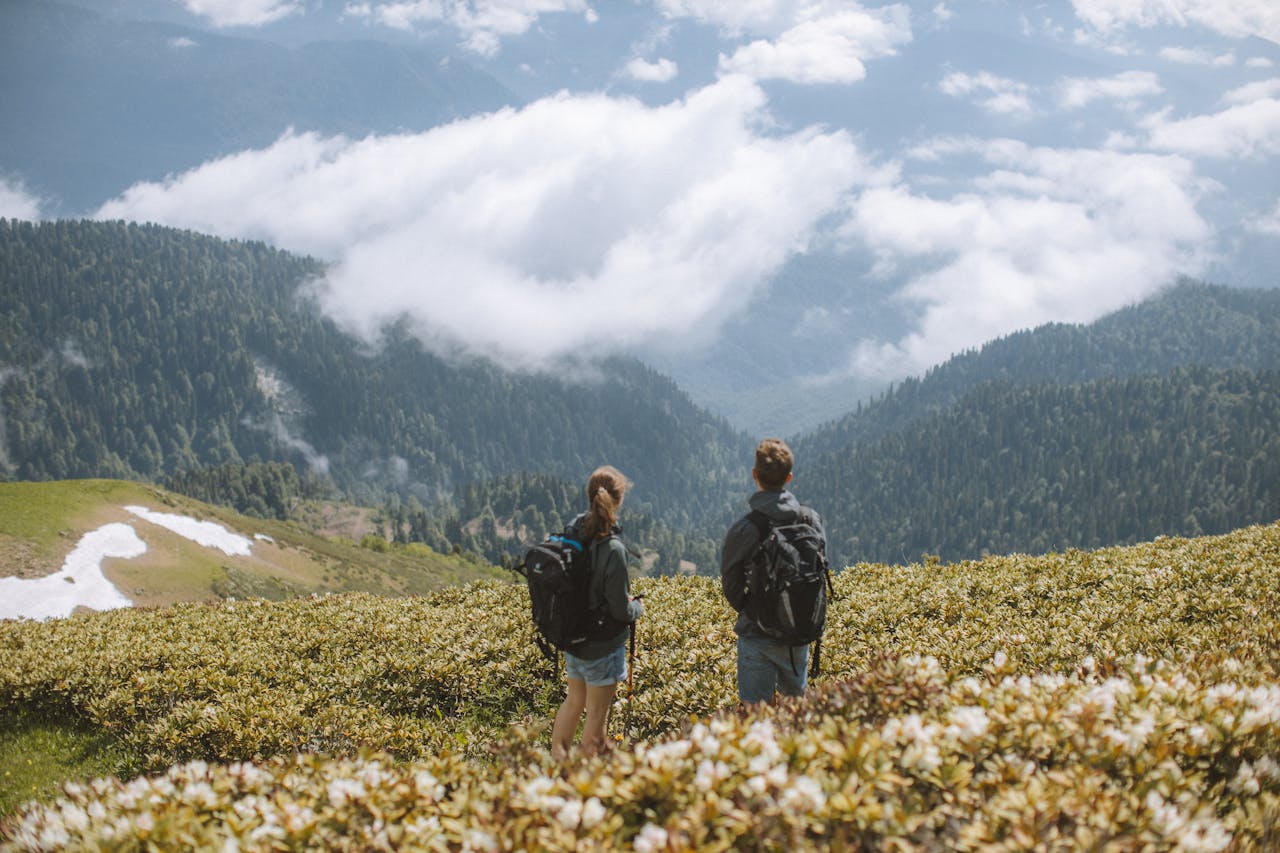
The Art of Unplanned Travel: Freedom, Chaos, or Something In Between?
Traveling without a plan occupies a peculiar space in the modern traveler's imagination — somewhere between an exhilarating dream and an impending disaster. For some, it represents the purest expression of freedom: you board a plane, step onto a train, or slide behind the wheel of a car and simply surrender to wherever the road leads you. For others, it's an anxiety-inducing recipe for stress, eye-watering hotel prices, and the distinctly unromantic experience of wandering unfamiliar streets at midnight, stomach growling, with nowhere to sleep and no idea where to find either rest or food. So which perspective holds true? Is spontaneous travel liberating freedom or thinly veiled chaos?
The Romance of the Unplanned Journey
There's something undeniably intoxicating about unplanned travel that speaks to our deepest desires for adventure and authenticity. Without a rigid itinerary dictating your every move, you're liberated from the exhausting cycle of rushing from landmark to landmark, frantically ticking boxes off a predetermined list like some kind of cultural scavenger hunt. Instead, you have permission to follow your instincts — to turn down an unfamiliar alley because you're drawn to the distant sound of live music, or to claim a corner table in an unassuming café and linger for hours simply because the atmosphere feels exactly right.
These unplanned, serendipitous moments often crystallize into the most vivid and treasured memories of any journey. Without the constraints of a schedule, you create space for genuine human connection — striking up conversations with locals who share insider knowledge no guidebook could capture, stumbling upon hole-in-the-wall restaurants where tourists rarely venture, or discovering hidden viewpoints, neighborhood markets, and quiet corners that exist entirely outside the well-worn tourist circuits. This kind of travel offers something increasingly rare: the opportunity to experience a destination not as a consumer checking off attractions, but as a temporary inhabitant absorbing its rhythms and textures.
The absence of time pressure fundamentally changes your relationship with a place. You notice details you'd otherwise miss — the way afternoon light filters through narrow streets, the particular cadence of a language spoken around you, the smell of bread baking in a family-run bakery. You have mental and emotional bandwidth to truly be present, rather than already thinking about the next scheduled stop.
The Hidden Costs of Spontaneity
Yet for all its romantic appeal, traveling without structure carries real risks that can quickly transform adventure into ordeal. During peak travel seasons — summer holidays, major festivals, school breaks — the lack of advance planning often means discovering that accommodation is completely booked, or that the only available options come with price tags that blow through your entire travel budget in a single night. Popular attractions, museums, and restaurants increasingly require reservations made days, weeks, or even months ahead. That Michelin-starred restaurant you hoped to try? Fully booked. Those famous museum tickets? Sold out online. That charming guesthouse everyone recommends? No vacancy.
The financial cost of spontaneity extends beyond inflated accommodation prices. Last-minute train tickets, rental cars booked on the fly, and emergency purchases of forgotten essentials all chip away at your budget. But perhaps more significantly, there's an emotional and physical toll. The combination of fatigue, hunger, uncertainty, and decision paralysis — what psychologists call "decision fatigue" — can drain the joy from travel with surprising speed. After hours of wandering with heavy luggage, growing increasingly tired and hungry while trying to find somewhere suitable to stay, the romantic notion of spontaneous adventure starts feeling more like poor planning.
There's also the matter of safety and practicality. Arriving in an unfamiliar city late at night without accommodation arranged means navigating transportation, assessing neighborhood safety, and making important decisions while jet-lagged and vulnerable. This scenario, while occasionally character-building, isn't everyone's idea of adventure — and for solo travelers, particularly women, it can pose genuine safety concerns.
The Personal Equation: Personality and Place
The success of unplanned travel depends significantly on two key variables: who you are and where you're going.
Personality matters profoundly. Some individuals genuinely thrive in ambiguity and uncertainty, treating problem-solving and navigation as integral parts of the adventure rather than obstacles to enjoyment. They possess either a natural resilience to stress or have cultivated it through experience. Others, through no fault of their own, find that lack of structure triggers genuine anxiety. For them, constantly facing unknowns doesn't feel freeing — it feels destabilizing. Neither approach is superior; they simply reflect different psychological wiring and preferences.
Your travel style also evolves with life circumstances. A twenty-year-old backpacker with minimal responsibilities and maximum flexibility approaches travel differently than a parent coordinating a family trip, or a professional with limited vacation days trying to maximize a rare break. Age, energy levels, travel companions, budget constraints, and available time all influence how much uncertainty feels adventurous versus stressful.
Destination characteristics play an equally crucial role. A spontaneous weekend in a major European capital during high season — think Paris, Barcelona, or Amsterdam — likely requires at least minimal advance planning unless you're prepared for significant stress and expense. These cities are simultaneously popular, expensive, and highly structured around advance bookings. Conversely, traveling through rural Southeast Asia, exploring small towns in Eastern Europe, or road-tripping through less-touristed regions offers vastly more room for flexibility. In these contexts, infrastructure often accommodates walk-in travelers, prices remain reasonable, and locals are accustomed to helping visitors navigate without reservations.
The nature of your trip also matters. A focused city break centered around specific experiences (concerts, sporting events, particular restaurants) demands more planning than an open-ended journey through countryside where the journey itself is the destination.
Finding the Sweet Spot: Structured Spontaneity
Perhaps the most sustainable approach lies not in choosing between rigid planning and complete chaos, but in embracing what might be called "structured spontaneity" — a framework that provides security while preserving flexibility.
This middle path might include:
Creating a safety net: Book your first (and perhaps last) night's accommodation to eliminate the stress of arrival and departure logistics. Research transportation options between major points. Keep a rough sense of approximate costs and realistic daily budgets.
Identifying priorities without over-scheduling: Make a loose list of experiences that genuinely interest you, but resist the temptation to schedule every hour. Know what matters most, then leave generous gaps for serendipity.
Building in buffer time: Rather than planning back-to-back activities, design days with breathing room. This allows you to extend experiences you're enjoying or pursue unexpected opportunities without derailing everything.
Leveraging technology wisely: Modern smartphones provide a remarkable safety net for spontaneous travelers — last-minute booking apps, translation tools, navigation, local recommendations. Use these tools to enable spontaneity rather than as excuses for zero preparation.
Researching flexibly: Understanding a destination's geography, cultural norms, safety considerations, and general price levels isn't the same as rigid scheduling. This knowledge empowers better spontaneous decisions.
Traveling slowly: The less you try to cram in, the more space exists for unplanned discovery. Staying several days in fewer places, rather than rushing through many, naturally accommodates both structure and spontaneity.
The Deeper Truth
Ultimately, traveling without a strict plan mirrors something fundamental about how we approach life itself — the eternal tension between security and possibility, between control and surrender. It's unpredictable, occasionally uncomfortable, sometimes frustrating, yet often remarkably genuine and alive in ways that carefully curated experiences rarely achieve.
The best trips usually aren't completely planned or entirely spontaneous. They're thoughtfully designed to accommodate both — enough structure to prevent unnecessary suffering, enough openness to allow magic. They recognize that while we can't control what happens, we can influence our readiness to embrace whatever comes.
Perhaps that's the real insight: the goal isn't to choose between planning and spontaneity, but to understand yourself well enough to know which balance serves you best. And then to remember that this balance might shift — between trips, across life stages, or even from one destination to another.
Traveling without a script means accepting uncertainty as part of the experience rather than a problem to eliminate. It means trusting your ability to navigate challenges. It means prioritizing presence over perfection, and stories over schedules. And maybe, in our increasingly planned and optimized world, that's exactly what makes it valuable — not despite the occasional chaos, but sometimes because of it.


